CCI: Implications for individual firms, the industry and investors

The Financial Conduct Authority’s new Consumer Composite Investments (CCI) regime represents a “step-change” in disclosure regulation that gives fund manufacturers new freedom to create innovative communication strategies aimed at helping consumers better understand financial products.

That’s the consensus of three expert panelists participating in a January 2026 Broadridge Webinar on CCI.

The FCA published its final CCI rules in December 2025. To help fund manufacturers and distributors assess the new rules and start planning strategies for implementation, Broadridge brought together industry and regulatory experts to discuss the goals, provisions, challenges and potential benefits of CCI.

The panelists agreed: The shift from the prescriptive mindset of the outgoing Packaged Retail and Insurance-based Investment Products (PRIIPs) regulation and Undertakings for Collective Investment in Transferable Securities (UCITS) KIID disclosures to the more flexible approach adopted in CCI has the potential to dramatically enhance disclosure policy and help build a stronger retail investment culture in the United Kingdom.

Comprehension over compliance

At the beginning of the Webinar, Ian Runacres, Technical Specialist in Consumer Investments Distribution Policy for the FCA, said flexibility sits at the heart of the new CCI rules. He explained that the FCA realised there were problems with PRIIPs and its Key Information Documents (KIDs), which he described as “dense, technical, and highly templated.” As a result of these shortcomings, “KIDs were not widely read, and among those that did read them, they were not widely understood,” he said.

Broadridge research backs this up. In 2025, Broadridge analyzed the language used in KIDs from 50 large UK asset managers. Of those documents, the vast majority were written at what would be considered an academic level. Only about 1 in 10 KIDs used language likely to be understood by the typical retail investor. Caoimhe Adams, Head of Regulatory Product at Broadridge, said these results suggest that UK disclosure had become “a case of compliance over comprehensibility.” That’s a missed opportunity for the industry, she said, since “clear language leads to an increased likelihood of someone investing.”

The new CCI regime is meant to change all that. By creating an outcome-focused framework that dictates standardisation only where absolutely necessary, the FCA is attempting to give manufacturers the flexibility to find new and creative ways to engage consumers and help them understand products and options. “We want to meet consumers where they are, not where a well-educated investor might ideally be,” Runacres said.

Broadridge Image
“We want to meet consumers where they are, not where a well-educated investor might ideally be,”
Ian Runacres
Technical Specialist in Consumer Investments Distribution Policy for the FCA

Simpler data, innovative approaches

Of course, the new disclosure rules do set some baseline minimum requirements for new Product Summary Documents (PSDs) in the areas of cost, risk and performance. But in all three topics, the FCA has consulted with industry to simplify and enhance data and it's presentation to make the information easier for retail investors to understand and use.

For costs, the new CCI format will strip out transaction costs and show headline ongoing costs represented in both percentage and monetary form, making it easier for retail investors to grasp how much will be charged and to compare costs with other investment alternatives.

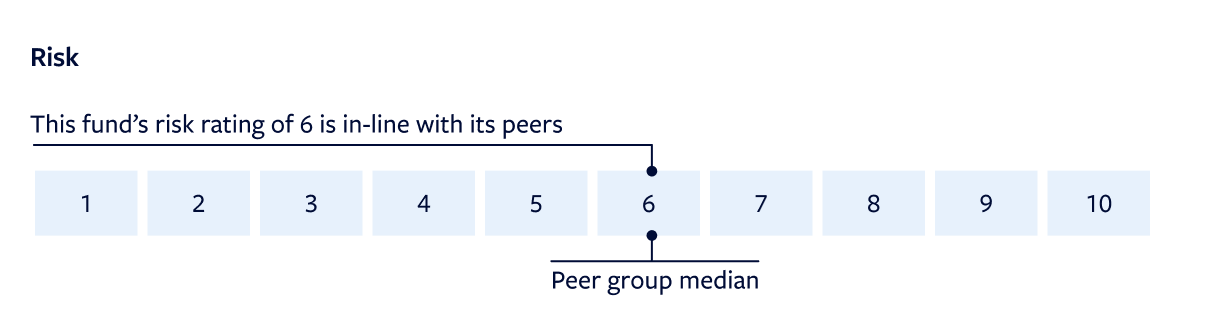
For risk, the CCI will change from the prior seven-point scale to a new and more intuitive 10-point scale based on 10 years of data, up from the five-year data set used in UCITS. The new metric will be dubbed the Risk Return Score (RRS).

For performance, the CCI abandons past bar charts and tables based on quarterly performance data in favor of line graphs using monthly data. Line graphs should include relevant benchmarks for easy comparison. The CCI preserves accompanying narratives that explain performance, but the FCA has adjusted guidelines to prevent these sections from becoming overly focused on risk and instead present a better balance of risk and return.

Mark Walter, Head of Partnerships at Hargreaves Lansdown, said these changes will improve the quality of disclosures by making it easier for investors “to compare like with like.” However, he says the industry is most excited about the innovation the CCI will allow above and beyond these prescriptive elements.

What will that innovation look like? Manufacturers have wide leeway to experiment with ways to engage consumers. For example, a manufacturer might try to better contextualize costs by showing comparisons to the cost of funds in a similar peer group. On risk, a manufacturer might decide to illustrate the maximum drawdowns that have occurred over a five-year period to help put some context around the risk score. For performance, manufacturers might again turn to peer comparison as a useful gauge for potential investors.

Throughout the new disclosure documents, manufacturers are encouraged to use “nesting” techniques that allow investors to drill down for more detailed information on sustainability or any other topic.


Examples of innovation to support consumer understanding

A manufacturer wants to help consumers contextualise the information in the product summary, including the value for money offered by their product.

img
img
img
Broadridge Image
“These changes will improve the quality of disclosures by making it easier for investors “to compare like with like.” However, the industry is most excited about the innovation the CCI will allow above and beyond these prescriptive elements.”
Mark Walter
Head of Partnerships at Hargreaves Lansdown

Transitioning to a stronger retail investment culture

Firms are free to transition from KIDs and KIIDs to PSDs after April 6, 2026. However, conscious of the operational challenge the move poses to distributors, manufacturers, and data providers, the FCA has built in 14-month transitional period, with June 2027 as the final deadline for compliance.

To gauge industry plans and readiness, Broadridge conducted a survey of Webinar participants. The results show that a strong plurality—nearly 40%—plan to switch to CCI for year-end 2026. Firms seem to believe that it doesn’t make economic sense to proceed with another year under the old framework, but they need time to handle the operational challenges associated with the change.

The panelists agreed that the transition to CCI will impose significant costs and operational burdens on distributors, who must be prepared in advance to accommodate funds on their platforms, as well as on manufacturers and data providers. For that reason, they advise all parties to engage with industry trade bodies and partner closely with service providers to effectively manage the change.

Regardless of when individual firms adopt CCI, the data and discussion from the webinar made clear that the next year will mark a huge step in the FCA’s efforts to overhaul disclosure and build a stronger retail investment culture in the United Kingdom.

Broadridge Image
“When consumers understand investment information, they are more likely to invest. The new CCI rules put that into practice.”
Caoimhe Adams
Head of Regulatory Product, FCS

The evolving CCI timeline

Final rules

December 08, 2025


Policy Statement and Final rules announced by the Financial Conduct Authority.

Transition starts

April 06, 2026


Legislation commences manufacturers can produce a Product Summary or a KID/KIID.

CCI deadline

08 June, 2027


Deadline for CCIs to move into the new regime. Firms in scope must comply with the full regime.

CCI FAQ

Understanding the key details, timelines, and required next steps is critical to maintaining compliance and staying ahead of change. If you have any follow-up questions or would like to arrange a call with us on the topic, please do reach out.

A CCI is any one of the below products:

  • Open Ended Funds e.g. Unit Trusts, OEICs, UCITS, AIFs
  • Closed Ended Funds e.g. Investment Trusts
  • Other complex products e.g. Derivatives
  • IBIPs
  • CFDs
  • Structured deposits/products

Any firm that manufactures or distributes a CCI to retail investors in the UK.

In the UK the PRIIPs regime and disclosure requirements under UCITS are being replaced by the CCI Product Summary Document

Format: 

  • Non-prescriptive ‘Product Summary Document’ (“PSD”) i.e. no page limitation and no structured template.
  • Provide durable medium to retail investor before and after sale of product.
  • FCA “expect firms to use plain English rather than technical jargon”.

Costs:

  • Ongoing Costs as a headline figure (per UCITS model) – no longer combining one off costs and ongoing costs
  • One-off Costs to be prominently displayed.
  • Implicit Transaction costs removed.
  • Explicit Transaction costs do not need to be aggregated with ongoing costs but should be disclosed, but not necessarily in costs section
  • Performance Fee  a narrative description only.
  • Look-through to underlying funds is required, excluding underlying closed-ended investment funds.
  • No ‘reduction in yield’ methodology applied (PRIIPs methodology).

Risk Info:

  • Move to a 1-10 scale using UCITS standard deviation methodology based on 10 years of data.
  • Provisions have been made for a risk score that bounces between two buckets but does not reflect a material change in volatility.
  • Adding +1 to illiquid product risk scores as opposed to auto assigning a ‘9’.
  • Ability to -1 to a risk score where 90% or more capital protection.

Performance:

  • Graph type changed to be a linear graph.
  • Monthly data points to be used instead of Annual data points. This is a change from the consultations which noted “quarterly” data points were to be used.
  • Pre-merger performance requirement removed.

Filing:

  • Product Summary Document to be filed with FCA.


Refresh frequency:

  • Minimum Annually.

Over the next 18 months, Manufacturers must transition to the new regime, in which they will be required to produce a ‘Product Summary’ document and provide the ‘core information’ in a machine readable format (like EMT/EPT .csv format). This will allow distributors to present the information on their platforms. Manufacturers will have the option to adopt the rules early subject to distributor readiness.

We expect FinDatEx to announce an update to their Data Templates in the near future to support CCI specific fields, thereby enabling manufacturers to continue to produce one EMT/EPT for both UK and EU markets.

There is a 14 month transition period for all CCIs, starting on 6th April 2026 and running until 8th June 2027. This represents an 18 month implementation timeline from today.

  • 08 Dec 2025: Policy Statement and Final rules announced by the FCA
  • 19 Feb 2026: Filing Deadline for UK UCITS KIID refresh
  • 06 Apr 2026: Legislation commences (earliest implementation)
  • 08 Jun 2027: Deadline for CCIs to move into the new regime

What's next for your business?

We want to hear more about what you need to improve your business and drive transformative innovation, efficiency, and growth.
required
required
required
required
required
required
required
required
This site is protected by reCAPTCHA and the Google Privacy Policy and Terms of Service apply.
Want to speak with a specialist?
North America
+1 800 353 0103(option 3)
Australia +61 743 569 934
Hong Kong +852 3004 3094
Singapore +65 31 351 278