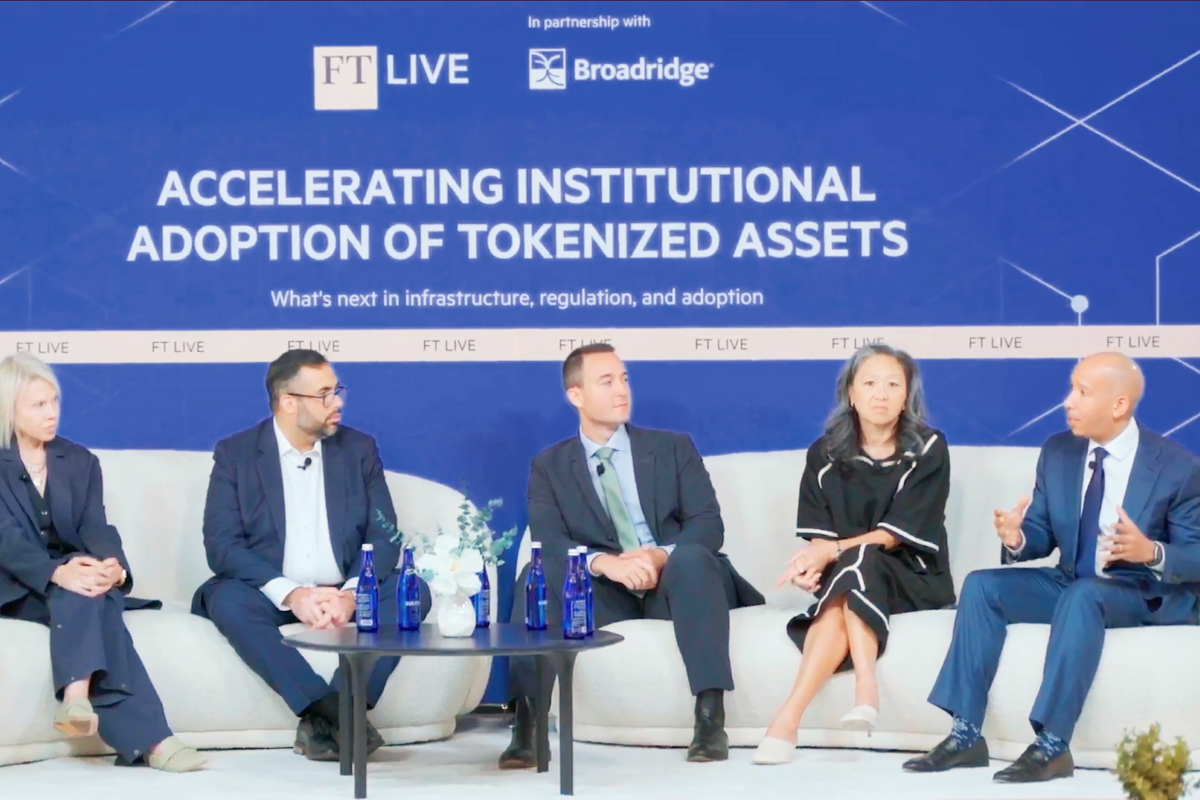
At the Broadridge x ASIFMA Hong Kong Tokenization Luncheon Forum, industry leaders explored where tokenization is creating measurable value in institutional markets.
Tokenization’s Real Value in Hong Kong - From Innovation to Utility
Tokenization has long been viewed as a future-state innovation, but it is becoming more practical and immediate.
At the Broadridge x ASIFMA Hong Kong Tokenization Luncheon Forum, senior business and tech leaders discussed where tokenization stands today and what is needed for broader institutional adoption. The focus is now on identifying where it creates real value and how it can fit into existing market structures.
Hong Kong provided a fitting backdrop, given its digital asset agenda, stablecoin development, institutional blockchain initiatives and deep capital markets infrastructure. The next phase will depend on practical use cases, trusted infrastructure, regulatory clarity, digital cash, interoperability and aligned incentives.
Tokenization has moved beyond the sandbox
One central theme from the forum was that tokenization is moving into production after years of pilots, sandboxes and announcements.
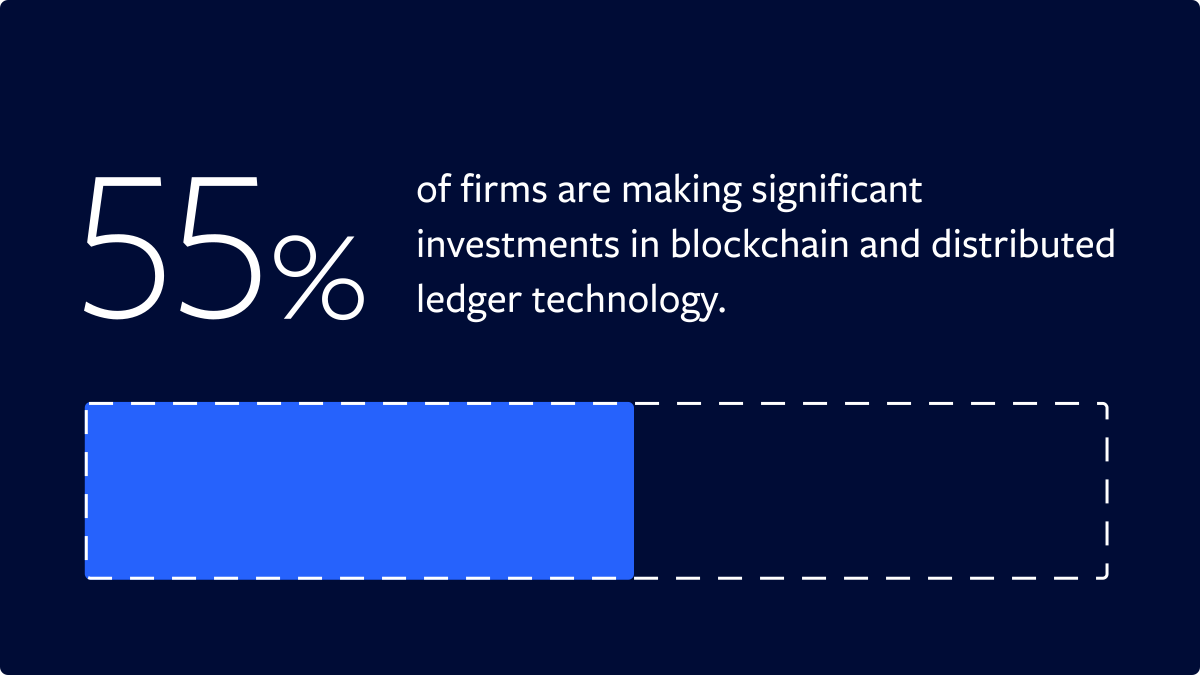
Institutional tokenization is expanding across use cases such as high-quality liquid assets, repo, collateral mobility, money market funds, private credit and tokenized deposits. The common thread is utility.
Horacio Barakat, Global Head of Digital Innovation at Broadridge, noted that certain tokenized market infrastructure is already operating at scale. Broadridge’s Distributed Ledger Repo platform has been in production since 2021 and is now processing $365 billion in repo transactions per day, up 220% year over year. That is an important proof point for the market: tokenized infrastructure can work in live, high-volume environments.
As tokenization is assessed through a commercial lens, market participants are asking whether it can improve collateral velocity, reduce funding costs, support intraday liquidity, expand distribution or create capital efficiencies. Where those benefits are visible, adoption is accelerating.
From operational efficiency to liquidity and capital benefits
The first wave of institutional tokenization focused on operational savings. Digitized workflows, shared ledgers and automation reduce reconciliation, manual intervention and settlement friction. But the Hong Kong discussion pointed to a broader opportunity: tokenization’s ability to change how liquidity moves through the financial system.
This is especially important in repo and collateral markets. High-quality liquid assets are central to the financial system, yet they are often constrained by settlement windows, fragmented infrastructure and operational processes. Tokenization can increase the mobility and velocity of those assets, helping market participants deploy collateral more efficiently and manage funding needs with greater precision.
Broadridge’s tokenized repo experience illustrates this shift. Once participants are in place, tokenization can support use cases beyond process efficiency, including access to intraday funding windows rather than solely overnight borrowing or unsecured credit lines. That has implications for cost and capital efficiency.
“Tokenization is no longer just about digitizing assets; it’s about rewiring how liquidity moves through the system.”
Horacio Barakat
Head of Global Digital Innovation, Broadridge
The use case test: Tokenization creating real value
A recurring message from the panel was that tokenization should be measured by adoption, usage and the value delivered to end users, not by the number of products launched or announcements made.
One panelist drew an important distinction between supply and demand. On the supply side, there is no shortage of institutions exploring tokenized products, including asset managers, infrastructure providers and digital asset platforms. But supply alone does not prove success.
The key question is whether the right products are reaching the right investors through the right infrastructure. In traditional markets, fiduciaries, asset managers and institutional investors need clarity, accountability and comparability with existing risk, return, audit and regulatory frameworks.
This is especially relevant for tokenized money market funds. These products have attracted strong interest because they combine blockchain-based transferability with yield-bearing characteristics. But not all tokenized funds are the same, and each product must be assessed on its own risk profile, investor base and operating model.
The implication is clear: it is not enough to say an asset can be tokenized. Market participants must show why tokenization improves the product, who benefits, how the economics work and whether it can scale.
Digital cash and interoperability are critical
The panel highlighted a key point: tokenized assets cannot move efficiently if the cash leg remains fragmented or disconnected. For delivery-versus-payment, repo, collateral movements and fund subscriptions, the asset and cash legs must work together. Tokenizing securities, funds or collateral reduces friction, but the benefit is limited if settlement still depends on off-chain cash movement, fiat conversion or manual processes.
This is why regulated digital cash is central to the next phase of tokenization. Tokenized deposits, stablecoins and wholesale central bank digital currency initiatives may each play a role, but institutional adoption will depend on acceptance, usability and integration with existing balance sheet, treasury and settlement frameworks.
Interoperability is equally important. Tokenization initiatives are emerging across banks, custodians, asset managers, exchanges, fintechs and blockchain networks, creating fragmentation. The industry therefore needs to connect tokenized assets, digital cash, custody, compliance, distribution and secondary market trading so value can move across the full transaction lifecycle.
Hong Kong’s opportunity and the next phase
Hong Kong is well placed to support tokenization’s next phase, with its institutional market depth, active digital asset ecosystem and growing work on tokenized securities, stablecoins and initiatives such as Project Ensemble. But leadership will depend on more than permitting new products. The real opportunity is to help build connected market infrastructure with the legal certainty, regulatory clarity and operational confidence needed for scale.
The discussion also reinforced that tokenization will only scale if the economics work. As roles such as custody, administration, distribution and settlement become more unbundled, the industry needs clarity on responsibilities, costs and incentives, especially for products like money market funds and stablecoins.
Broadridge is supporting this market evolution by extending its infrastructure across both traditional and digital asset ecosystems. Its tokenization capabilities include on-chain proxy voting and governance, wallet and custody capabilities, and integrated infrastructure that supports tokenized and traditional securities across order, execution and post-trade workflows. As tokenization gains momentum across financial services, the ability to operate across asset classes, market structures and settlement models will be critical to helping institutions move from experimentation to practical adoption.


What's next for your business?
We want to hear more about what you need to improve your business and drive transformative innovation, efficiency, and growth.
Want to speak with a specialist?
North America
+1 800 353 0103(option 3)
EMEA
+44 162 591 9082
Hong Kong
+852 3004 3094
Singapore
+65 31 351 278