Legacy compliance rules, such as prescriptive text and formats often conflict with Consumer Duty’s emphasis on customer understanding. With many firms experiencing the challenge of conflicting rules, we wanted to highlight this issue and provide hard evidence of the impact. We wanted to see how a reimagined approach, using behavioural science and focused on clarity and comprehension, could satisfy both the customer and regulator’s desire for good understanding.
The Consumer Duty Compromise
Legacy regulation is undermining customer understanding. We tested a way to improve comprehension and reduce potential harm.
Methodology
Reimagined communications improved comprehension
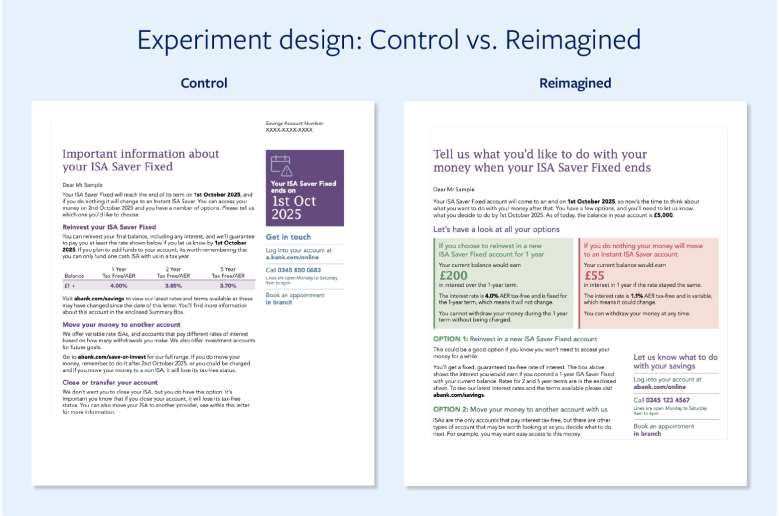
A move away from the ‘table design’, prescribed by regulation, for the summary box allowed us to refine critical messages. Participants could more easily and quickly read the reimagined version.
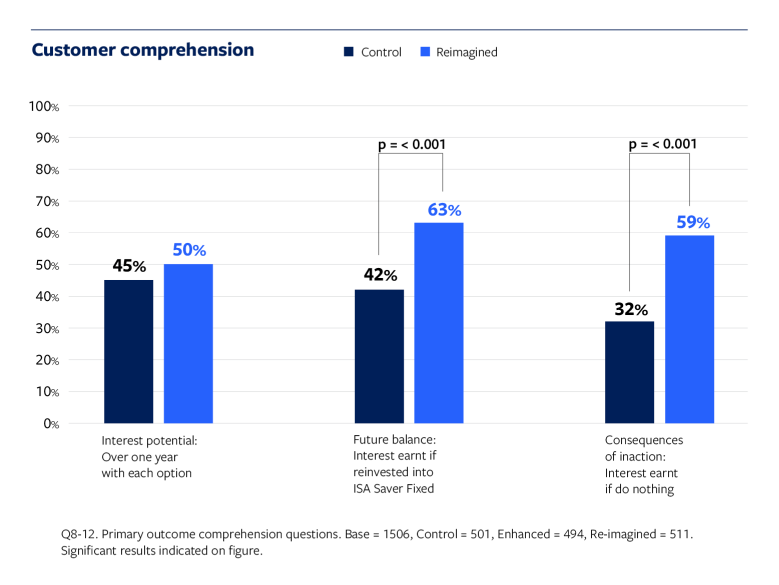
Understanding of the consequences of inaction was notably higher in the reimagined group. 59% of those participants correctly understood the implications, nearly double the 32% in the control group.
The report explains how behavioural science principles have been applied to improve comprehension in the reimagined version.
Key questions answered in the report include:
Uncover the reasons some customers struggle to find answers in the dense, content-heavy “table” design prescribed by FCA regulations. (Pg. 9)
Examine the gaps between perceived understanding – 80%+ participants reported that all versions of the letter are “clear, fair and easy to understand” – and actual comprehension. (Pg. 10)
Look at the ways updated layouts, outcome-focused storytelling, and personalisation can reduce confusion. (Pg. 15)
Read what senior comms leaders feel about the impact of regulation on clear customer communications. (Pg. 17)
Enter the next era of regulated communications management
Consumer expectations and regulatory pressure are pushing firms toward wholesale change. Customer outcomes will be paramount. But the FCA have been quick to point out the work ahead, claiming that we are still at “the end of the beginning of Consumer Duty.”
Read the full paper for more on aligning teams and technology to execute critical regulatory touchpoints with a customer focus.
Get the report
Take a deep dive into the ways behavioural science can improve customer comprehension.