Non-Qualified Deferred Compensation Plans:
A growing and evolving tool in employee compensation

In a competitive market for talent—especially for upper management—companies need every advantage to attract, reward and retain key executives.

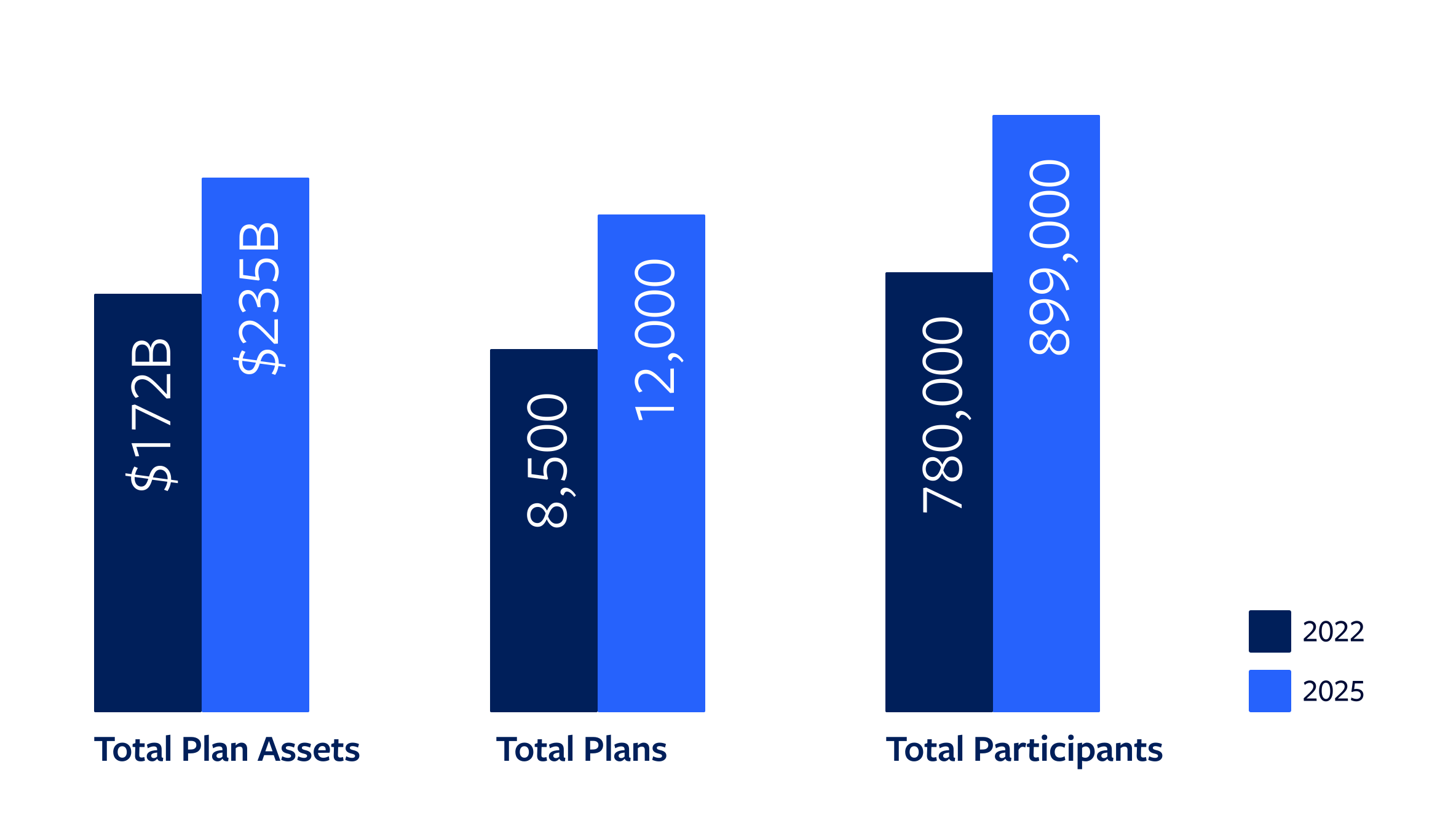
While aggressive cash awards, equity grants and stock options have become commonplace in compensation packages, we have also seen tremendous growth in Non-Qualified Deferred Compensation Plans, also called “Non-Qual” plans. The number of these plans has grown by more than 40% and assets have increased by more than one-third in the last three years alone.[i]

Growth of Non-Qualified Deferred Compensation Plans (2022-2025)

img
Source: PLANSPONSOR, 2025 Record Keeping Survey, June 2025

Growing sophistication is changing the Non-Qual landscape

Companies have been attracted to these plans as they offer an additional tool in their HR toolbox to reward critical employees. They are also attracted by the additional flexibility in how they can fund the liabilities in a Non-Qual plan versus more traditional retirement accounts.

Simultaneously, executives are becoming more sophisticated in their understanding of these plans. Highly compensated employees see benefit from Non-Qual plans because they provide a way to save more than the IRC Section 415 limits and can help them defer the income taxes due on the compensation placed in the plan until it is paid out.  The result is increased plan adoption and creativity in how Non-Qual plans are structured and administered.

Funding is shifting towards insurance-based products

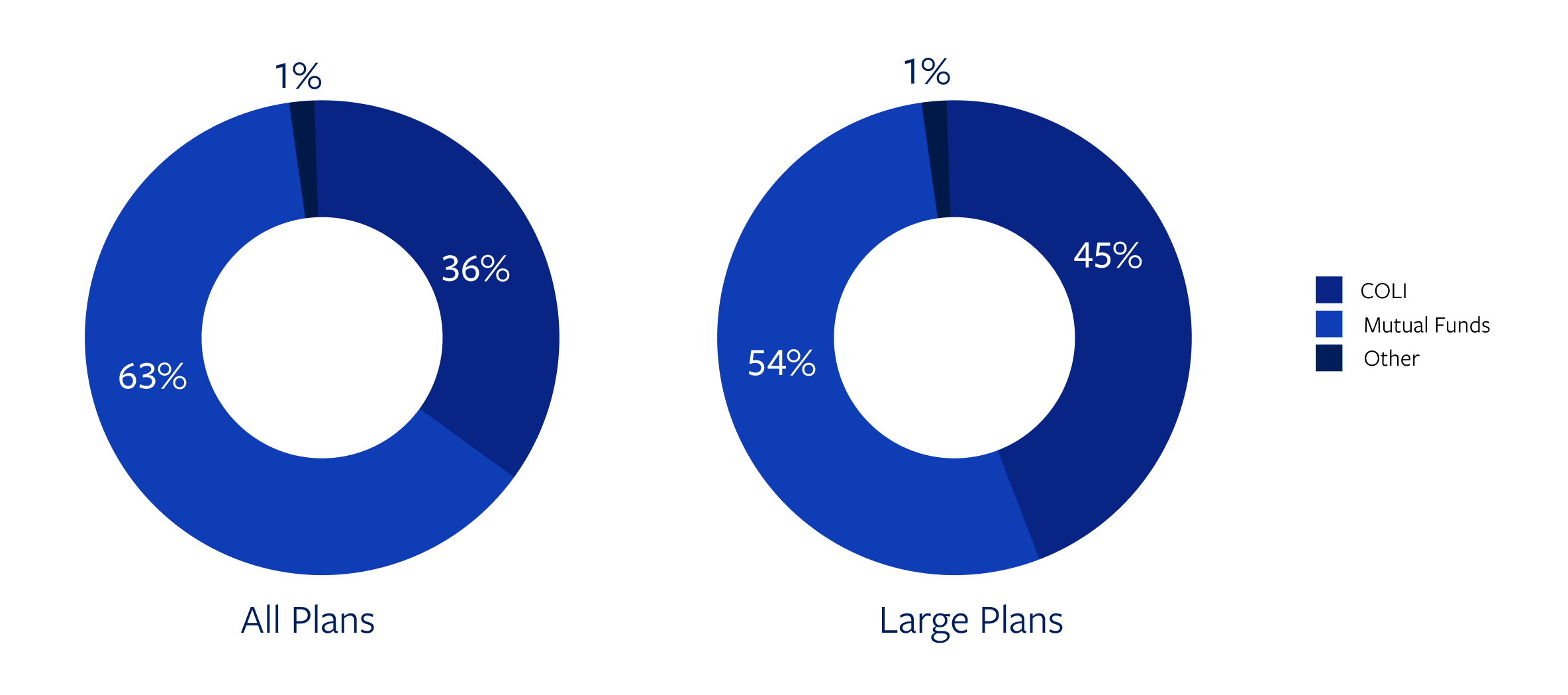
Companies have a wide range of choices when it comes to funding their Non-Qual plan.  Nearly 80% use informal funding vehicles to fund their plan. Companies with large plans are increasingly using company-owned life insurance (COLI) to fund their plans versus using cash, company stock or other assets, while smaller plans continue to use mutual funds to maintain liquidity and flexibility.[ii]

Plan use of COLI, by size

img
Source: Mullin, Barens, Sanford Financial, 2024 Nonqualified Deferred Compensation Plan Recordkeeper Survey. Large plans are defined as those that have 51, or more, participants.

Using insurance to fund some, or all, of a plan provides meaningful benefits to both the employer and the employee.

  • For employers, the cash value of the insurance policy grows on a tax-deferred basis while offering the predictability of a pre-set annual premium and reduced investment management risk by deferring it to the insurance provider.
  • For employees, funding the plan with insurance offers additional security and peace of mind that benefits will be paid, as the policies come with guarantees that are secured by an independent third-party.

In many instances, companies use a combination of insurance and mutual funds to fund their plan to help better align the assets with the income needs and preferences of participants.  This multi-asset approach can enhance the plan, but also requires support from recordkeepers who specialize in this market and can handle multiple funding types.

Companies are seeking specialized expertise and support

Historically, companies looked to find a single provider to handle all of their Non-Qual plan administration.  However, as plan complexity and participant sophistication has increased, companies are now increasingly more likely to use a range of providers with expertise in their respective areas to manage their plans.

By unbundling the services, companies are better positioned to be able to tap into the best provider for each element of the plan’s management, whether that be trust administration, investment management, or risk management.

While plan sponsors maintain responsibility for plan design, regulatory compliance and financial reporting, companies can bring in specialists to assist with key aspects of plan administration, such as:

Executive Benefits Consultants
  • Advise employers on plan design and benchmark against competitive plans
  • Help align benefits with organizational goals and executive needs
  • Work to ensure the plan attracts, retains, and rewards key executives
TPA / Recordkeepers
  • Handle plan administration and recordkeeping, tracking participant balances, elections, and benefit calculations
  • Track deferrals, distributions, and balances
  • Ensure participant-level reporting and communication are clear and timely
Legal Counsel
  • Advise on compliance with ERISA exemptions, IRC Section 409A, and other regulations
  • Draft and review plan documents and agreements
  • Mitigate legal and compliance risks by ensuring plan documents are enforceable and align with corporate and regulatory requirements
Trustees / Custodians
  • Custody and safeguards assets
  • Execute distributions and provides reporting, based on the direction from the sponsor and/or recordkeeper
  • Trade investments or informal funding vehicles
  • Provide transparency into plan funding and investment performance

While this unbundled approach offers plan sponsors the ability to tap into the best possible provider for each aspect of plan administration, it requires firms to work with a partner who can service and report on trust assets while managing data links with a range of providers to ensure reporting and benefit payments, if applicable, are timely and accurate.

Plan sponsors feel they need to take a more holistic approach to serving participants

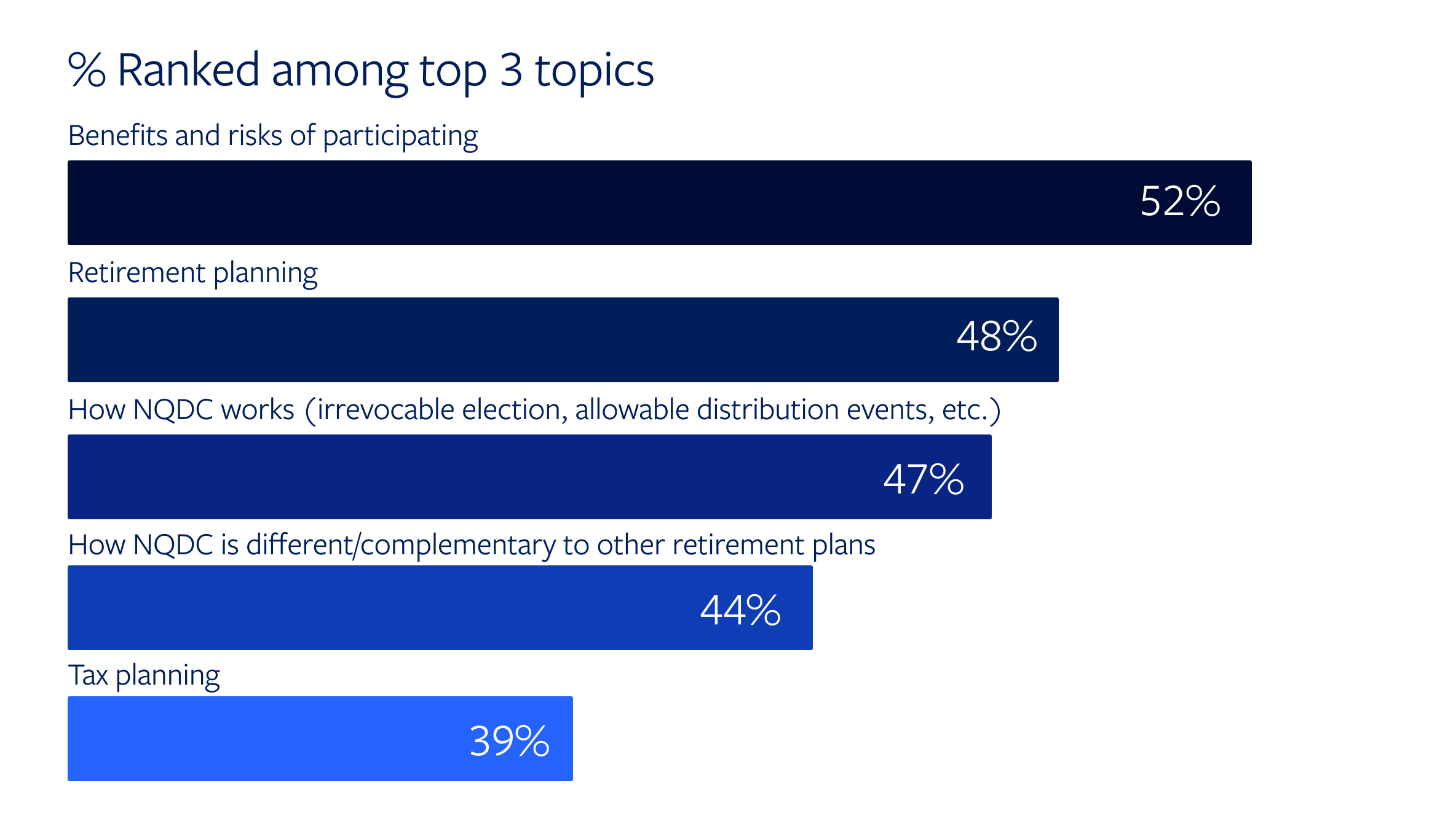
Even with growing sophistication among plan participants, Non-Qual plan sponsors increasingly feel that they could do more to educate their employees about topics related to the plan, such as deferral elections, distributions, and tax implications.  Less than half of plan participants rate themselves as very knowledgeable about their Non-Qual plan.  Furthermore, 98% of plan sponsors feel they could do a better job of educating employees about the plan, with 47% strongly agreeing with this statement.[iii]

Some companies are going further, taking a truly holistic approach to financial wellness by offering financial coaching, guidance, and education that is designed to help participants improve their financial literacy, confidence, and behavior.  Yet even with plan sponsors aware of the need for better financial education, fewer than one-in-three firms have these kinds of robust programs in place[iv]

Top educational needs identified by plan sponsors

img
Source: Morgan Stanley at Work, Nonqualified Deferred Compensation Survey, 2024.

Taking a broad-based approach to financial education and wellness can help companies reframe the compensation narrative to one that focuses less on immediate reward to one that speaks to employees long-term needs. This has a direct benefit by helping employees fund their current lifestyle while also helping them create dependable income sources using their plan assets, 401(k)s and other retirement savings vehicles.  It also has a direct impact on satisfaction with employers as these value-added services have the potential to increase perceived value of the Non-Qual plan itself.

Successful plan management is a team effort

The complexity of establishing and managing a Non-Qual plan does continue to be a barrier to adoption. This is why companies looking to put a plan in place should seek out trusted sources of guidance to help.

An experienced retirement plan advisor can help guide HR finance, and other staff through things like plan design, distribution timing, risk, and integration with other employer-sponsored benefits. An advisor can also offer the kind of holistic help that looks across a participant’s full financial picture to help them make the most of this powerful employee benefit.

Many of these advisors can also recommend other service providers to deliver specialized tax and legal experts services or will work with the providers that the company has selected to round out its team of Non-Qual experts. This coordinated team approach helps ensure that they can support clients across the full range of creation, management and distribution of plans.

Broadridge can help

Broadridge works with a wide range of recordkeepers, consultants, advisors and plan sponsors alike, offering guidance and support for Non-Qual plans. With more than 25 years of specialized experience, Broadridge's Retirement and Workplace Solutions provides comprehensive independent directed and discretionary trustee solutions, custody and trading, and paying agent services—all designed to complement the services of our clients and our partners.

To learn more, contact our team, using the form below.
[i]PLANSPONSOR, 2025 Record Keeping Survey, June 2025

[ii]Mullin, Barens, Sanford Financial, 2024 Nonqualified Deferred Compensation Plan Recordkeeper Survey

[iii]Morgan Stanley at Work, Nonqualified Deferred Compensation Survey, 2024.

[iv]2024 Newport/PLANSPONSOR NQDC Trends Survey Report

What's next for your business?

We want to hear more about what you need to improve your business and drive transformative innovation, efficiency, and growth.
required
required
required
required
required
required
required
required
This site is protected by reCAPTCHA and the Google Privacy Policy and Terms of Service apply.
Want to speak with a specialist?
North America
+1 800 353 0103(option 3)
Australia +61 743 569 934
Hong Kong +852 3004 3094
Singapore +65 31 351 278