Financial markets have never been more accessible or more attractive to everyday investors. A combination of persistently strong returns, zero-fee trading, and easy-to-use investing apps has democratized access to everything from blue chip stocks and ETFs to cryptocurrency and alternative investments for anyone with an internet connection. In the last five years alone, the proportion of active mass market investors1 in mutual funds, ETFs, and stocks has increased to 17%, up from 16% from five years ago, according to Broadridge data.
Economists have begun to point to this democratization trend as creating a “wealth effect,” whereby rising asset prices are helping to blunt the impact of an uncertain economy by making people feel more confident making large financial purchases.
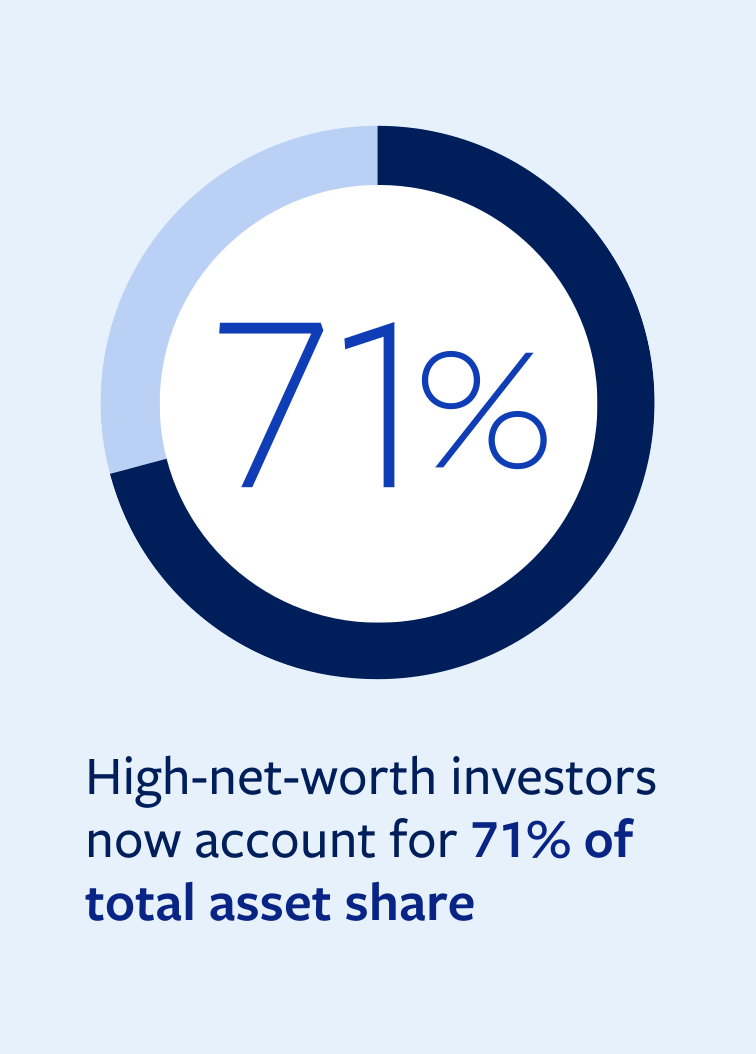
There’s only one problem with that logic: Participation growth is not wealth growth. While participation in financial markets continues to rise, the concentration of wealth generated in those markets is overstated and still reserved for a select few rather than broadly shared among households. In fact, when we look at assets under management and total asset growth, high-net-worth investors now account for 71% of total asset share. So, even though more people are in the markets, the outsized asset concentration at the higher end of the wealth spectrum is far outpacing that of mainstream investors.
The Broadridge Investor Pulse series offers a by-the-numbers analysis of the current state of investing based on data drawn from the holdings of over 51 million investors, complemented by semi-annual surveys of 1,000 retail investors and 400 financial advisors.
1 Mass market investors are defined as investors with under $100,000 in investable assets. High-net-worth 1 investors are defined as investors with $1,000,000 to less than $5,000,000 in liquid investable assets. High-net-worth 2 investors are defined as investors with $5,000,000 or more in liquid investable assets.
Growth in mass market assets vs. growth in wealth
As is often the case with macroeconomic trends, a single compelling data point can sometimes obscure important details and nuances about what’s happening beneath the surface. Such is the case with the democratization of investing. While it is true that mass market investors occupy a much larger slice of the overall investing landscape than they once did, when you look at recent trends in growth in portfolio value, high-net-worth investors have by far been the biggest beneficiaries of strong stock market performance.
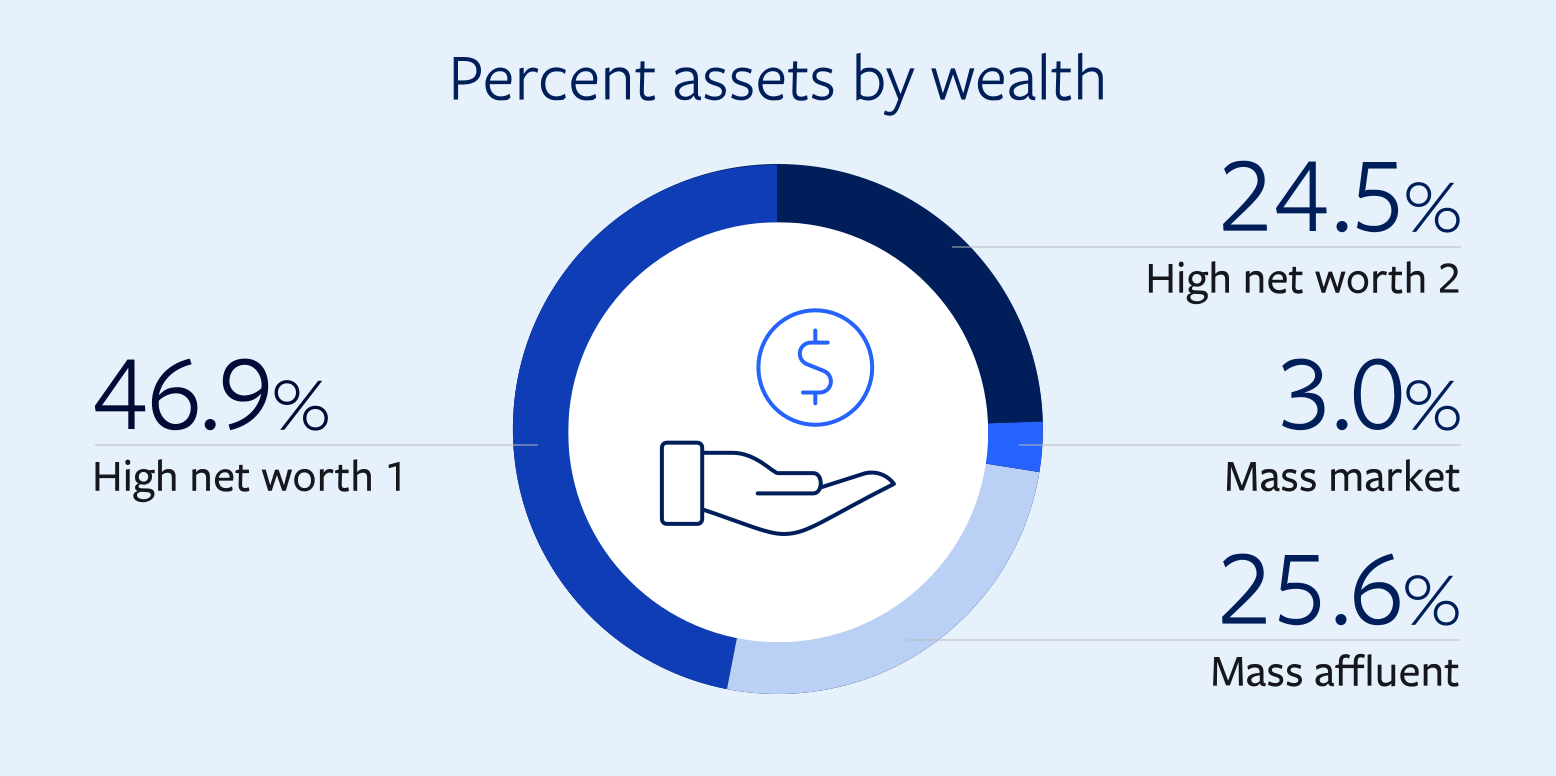
As we see in the chart below, the percentage of assets held in the portfolios of mass market investors now accounts for just 3.0% of total assets under management in U.S. mutual fund, ETF, and stock portfolios. While that total has increased one percentage point over the past five years, it still pales in comparison to the 46.9% of assets held in high-net-worth-1 portfolios and the 24,5% of assets held in high-net-worth-2 portfolios.
On a total portfolio value basis, the median mass market investor has just $8,272 currently in the market. By contrast, high-net-worth-1 investors have a median portfolio value of $164,632 and high-net-worth-2 investors have a median portfolio value of $387,752.
Participation is growing faster than wealth ownership
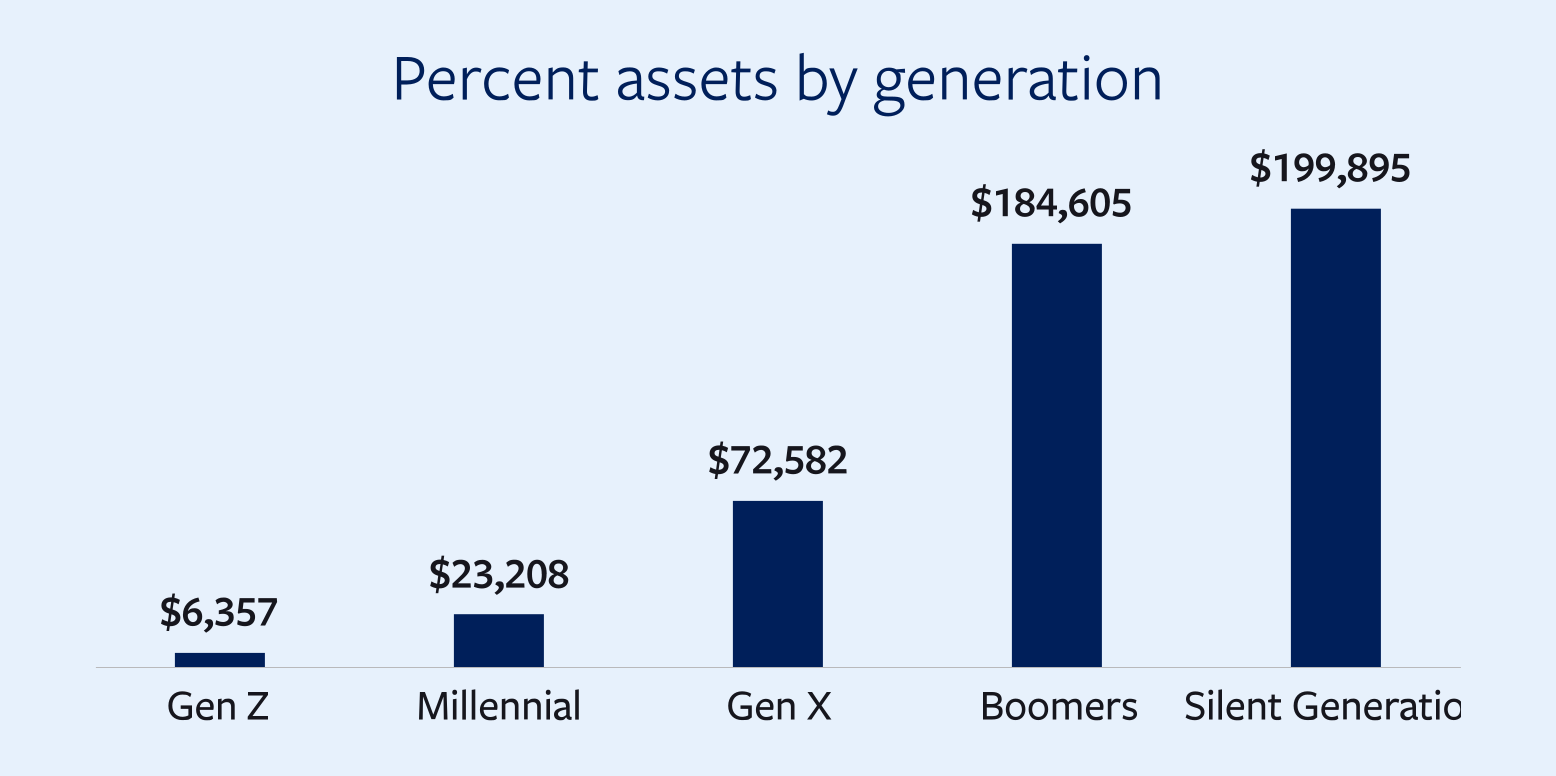
Another major trend that gets a lot of attention these days is the rapid rise of younger investors entering the markets. In fact, Gen Z now accounts for 8.9% of all investors and Millennials now account for 24.6% of all investors. While that’s more than 10 percentage points higher than the level we saw just five years ago, the total share of wealth owned by these younger generations is still just one-tenth of what’s held by the Silent Generation, Baby Boomers, and Gen X.
As the chart below indicates, Gen Z has a median portfolio value of $6,537 while Millennials are at $23,208, which is collectively one-third of the average Gen X portfolio ($72,582) and one-eighth the average Boomer portfolio ($184,605).