Introduction
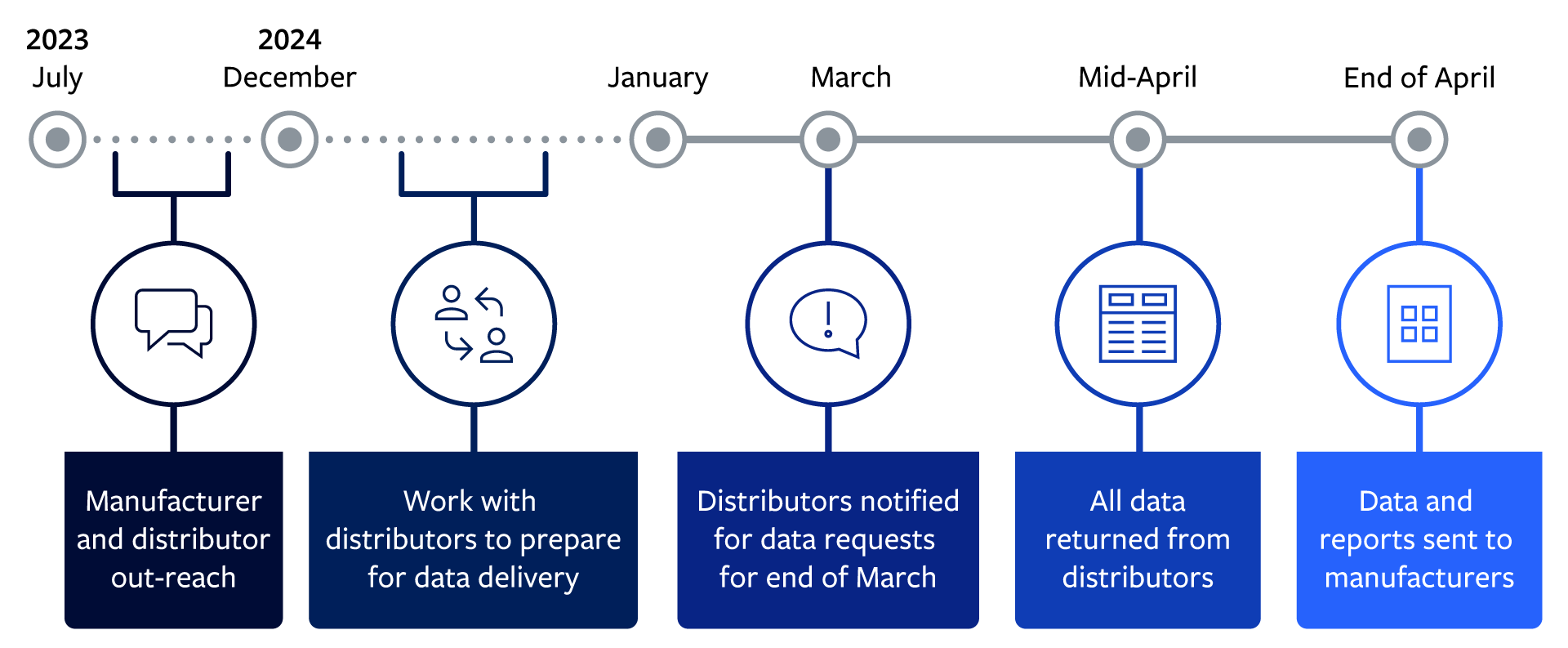
The FCA’s recent Consumer Duty has joined the ranks of other regulations, such as MiFID II , to create a culture within the industry aimed at protecting consumers and prioritising their needs. Under the section “PRIN 2A.3 retail customer outcome - products and services” there is a requirement for manufacturers to regularly review their products. This has created an obligation for distributors to provide information to manufacturers to assist in their product review processes. Fast approaching is a logistical headache in the lead up to March 2024 as asset managers and platforms scramble to come to terms with the realities of this feedback loop.
The Challenge
As an industry we have become comfortable with the established flow of product information from manufacturers to distributors and surely a simple reversal of this process cannot be too problematic, can it? The FCA has made it noticeably clear in FG22/5 that is expects industry co-operation with failure resulting in a breach of regulation:
- 2.22 Distributor firms are required to share information to support manufacturers when reviewing products or services. Where firms do not comply with this requirement, they may therefore be in breach of the Duty.
- 6.68 To support manufacturers’ reviews, distributors must, upon request, provide relevant information, including, where appropriate, sales information, information on cancellations, and information on the regular reviews of their distribution arrangements.
- 6.69 The requirement to provide information to support manufacturer reviews applies to all distributor firms in the distribution chain. We expect all firms in a distribution chain to co-operate.
The Distributor Feedback Template
To keep distributors and manufactures compliant with Consumer Duty a working group from the Joint Trade Association has created the Distributor Feedback Template (DFT) along with supporting guidelines. This template will go a long way to being the panacea for the operational predicament facing the industry. By normalising the flow of information and creating an industry standard for the quality of feedback, the DFT will be a vital component to the new process. Becoming savvy with the template will be essential and guidance has been issued as to how firms should approach use of the DFT.
For a more detailed look at this advice please see the DFT Guidance Document
The working group has also broken the process into two categories:
Quantitative Data
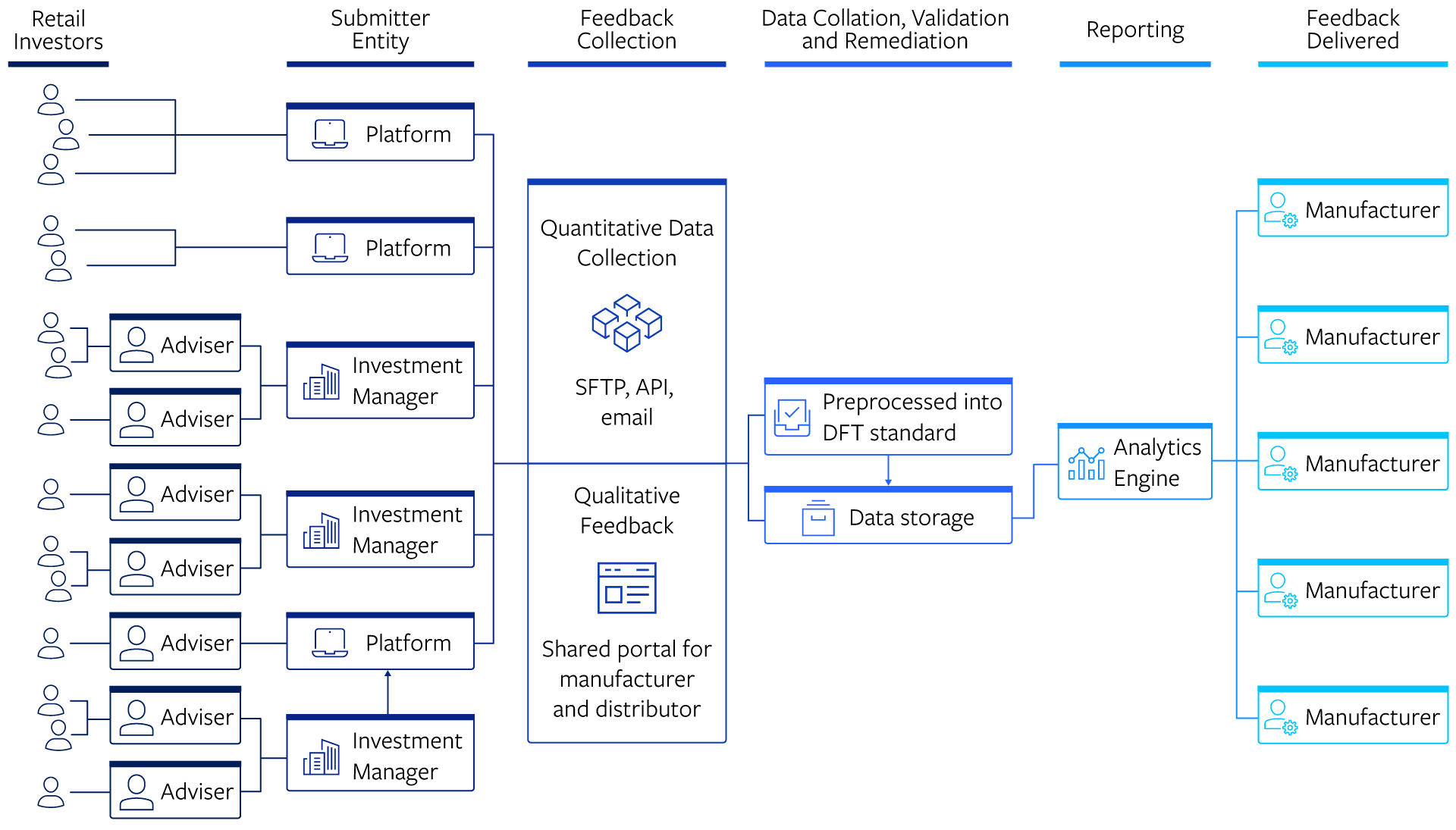
This is data which is capable of being automated or standardised (subject to the limitations noted below) for periodic reporting such as sales data, sales outside target market, holdings data and redemptions. The FCA has stated that it expects to see an information flow and to this extent there is an intention that quantitative data should be automated. Manufacturers will be looking for a technology provider that can supply a robust stream of validated data collated from a multitude of distributors.
Qualitative Data
This is data which should be notified to manufacturers as and when specific events arise and which may require detail or narrative that cannot be automated or standardised such as distribution issues, complaints, and poor outcomes.
Qualitative data may require firms to put in place internal processes around communications and may find it necessary to collaborate with a partner who can assist in capturing and sharing the qualitative feedback.