Transformation Accelerated

Download the full report

2026 Digital Transformation & Next-Gen Technology Study

Insights from more than 900 global financial services technology and operations leaders reveal how digital transformation is accelerating and where the winner’s playbook is beginning to take shape.

This sixth annual study shows how firms are prioritizing AI, tokenization, data integration, and modern platforms to stay competitive.
Get the full report
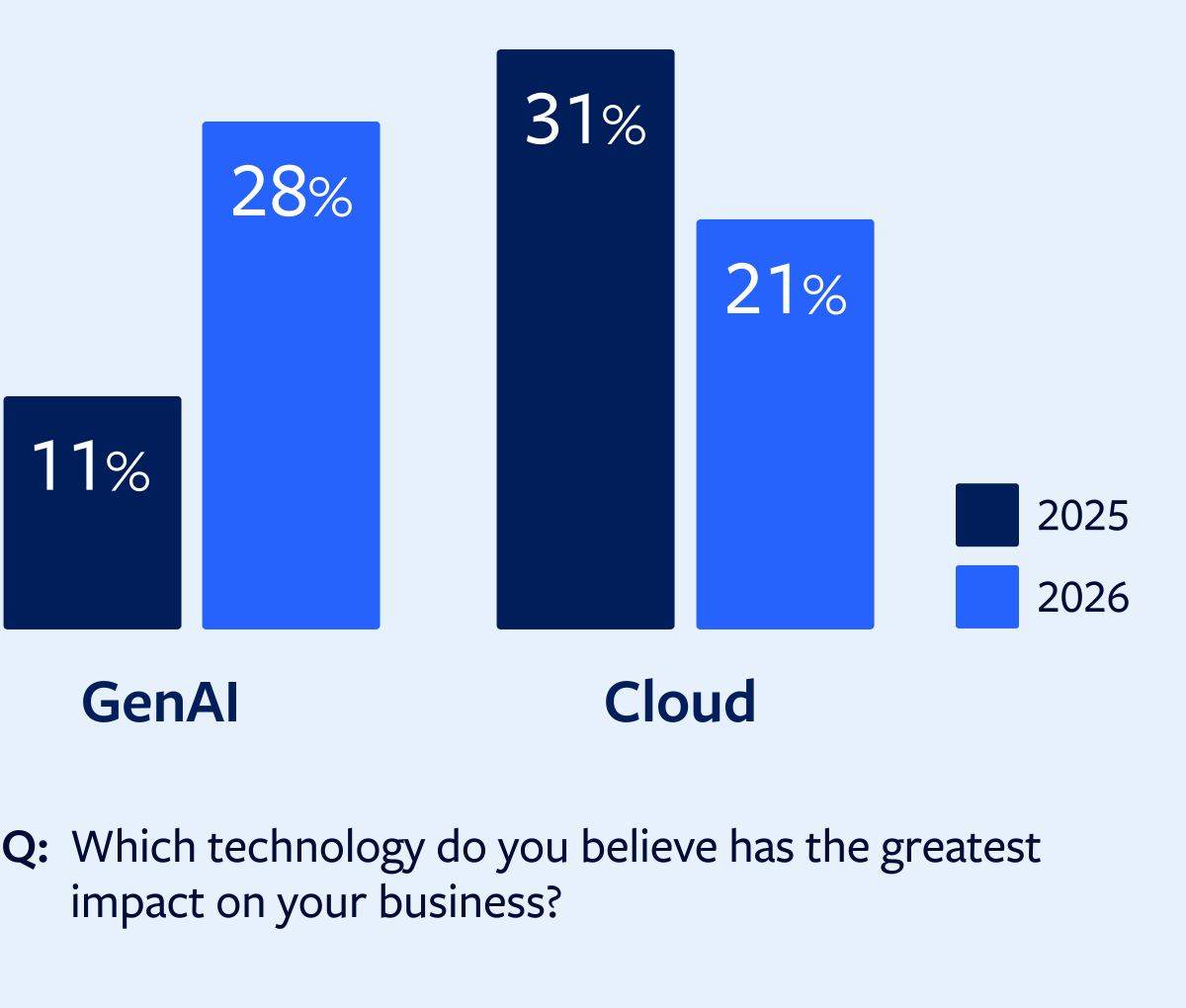
Bar chart showing GenAI surpassing cloud as the most impactful financial technology in 2026, with GenAI rising from 11% in 2025 to 28% in 2026, while cloud declines from 31% to 21% in financial services survey results
GenAI powers ahead as most impactful financial technology

GenAI has now surpassed cloud as the technology respondents believe will deliver the greatest impact to financial services firms, and agentic AI is quickly catching up as firms plot their five-year transformation journeys.

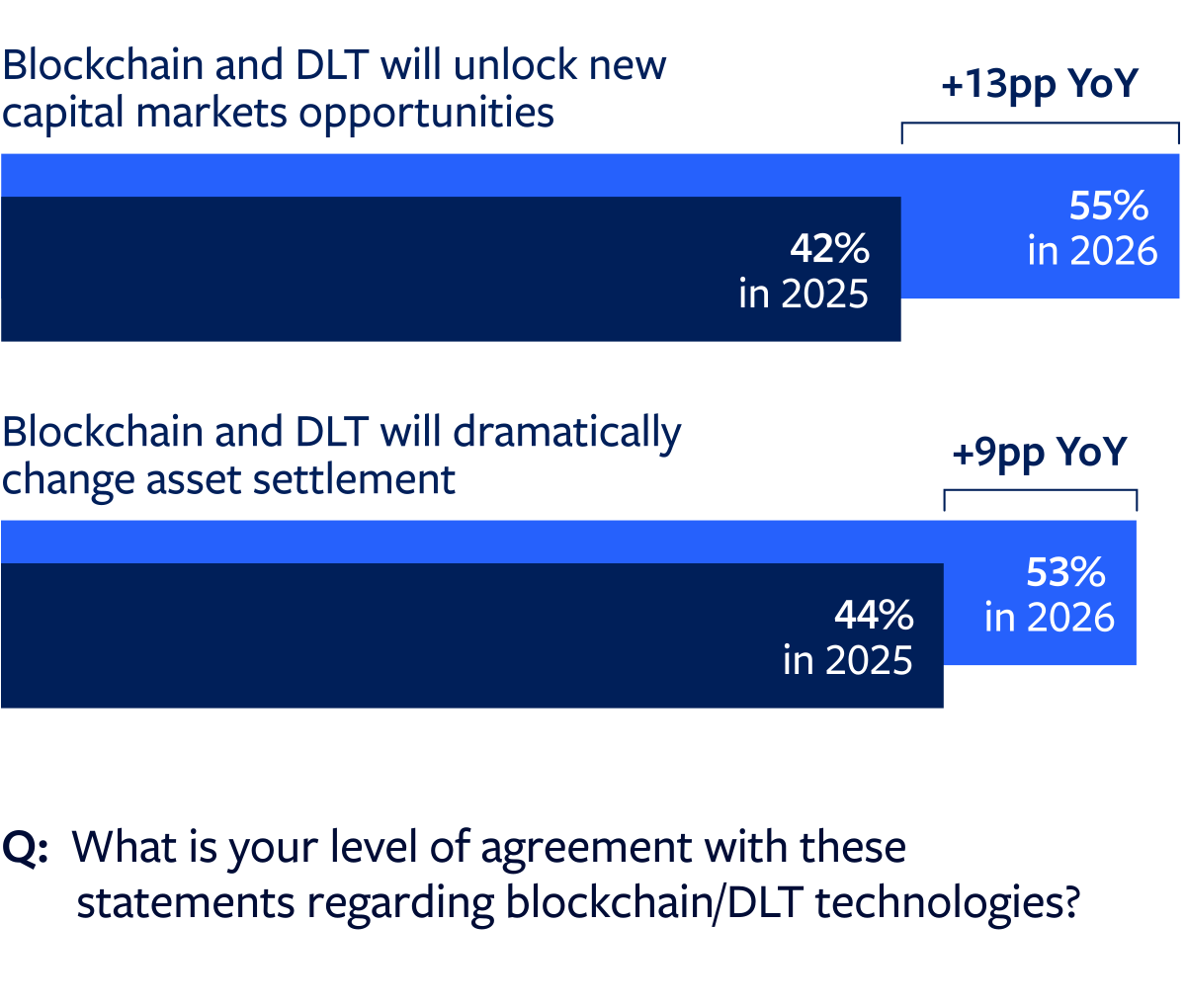
Infographic on tokenization and blockchain in financial services showing 55% of firms in 2026 (up from 42% in 2025) see DLT unlocking capital markets opportunities, and 53% (up from 44%) expect major asset settlement changes.
Tokenization sets stage for massive market structure changes

Mainstream trading of tokenized securities is quickly moving from speculation to reality. More than half of firms are now making significant investments in blockchain and distributed ledger technology in anticipation of major changes to trade processing and settlement.

See how you stack up

Discover the data and insights driving the digital transformation journeys of the world’s leading firms.

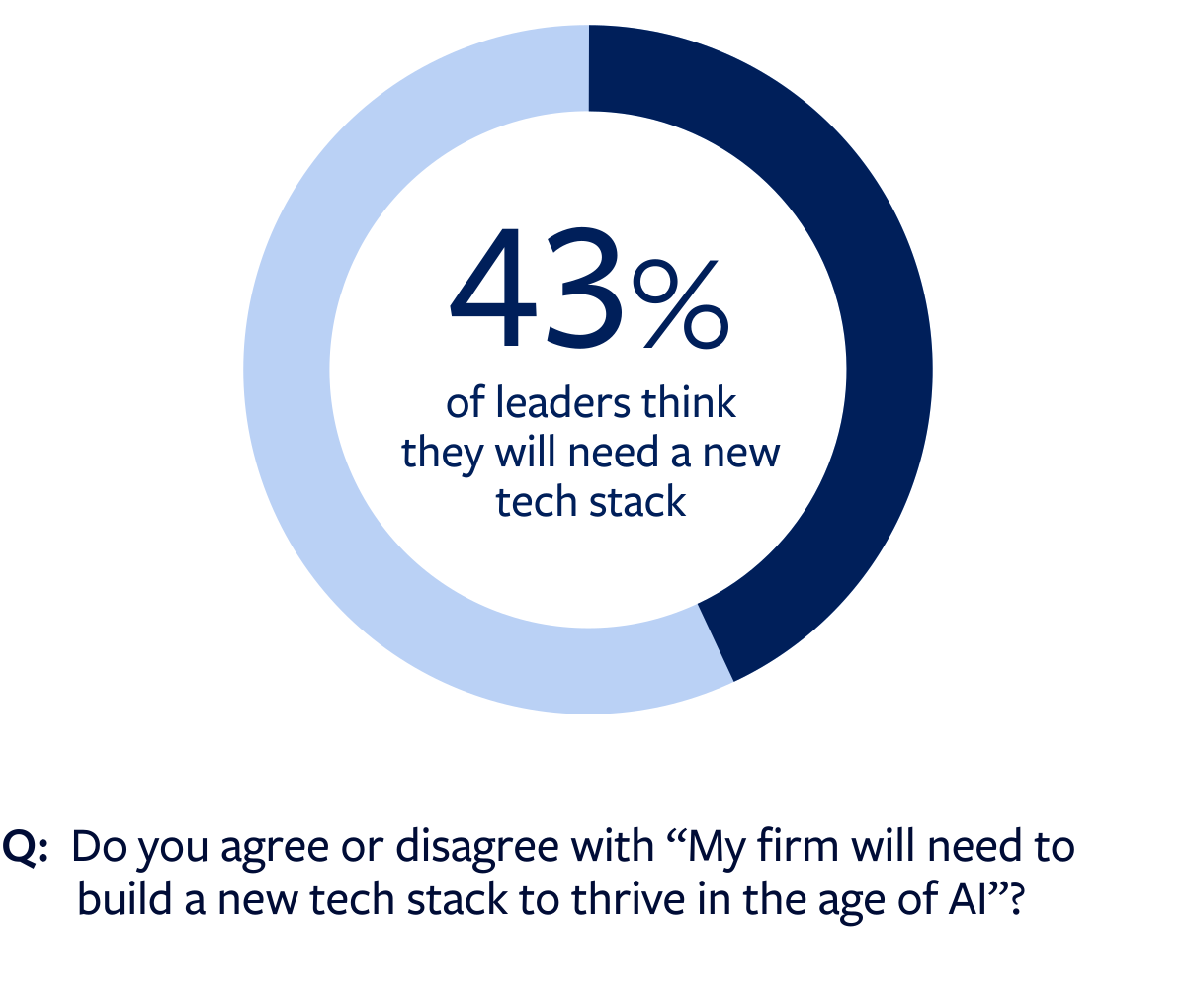
 Infographic on AI-driven tech modernization in financial services showing 43% of firms say they need a new tech stack to support enterprise AI and digital transformation.
Firms confront tough challenges with existing tech

For many firms, enterprise AI projects are highlighting systemic weaknesses: almost half of firms (43%) say they will need to build an entirely new tech stack in order to thrive in the age of AI.

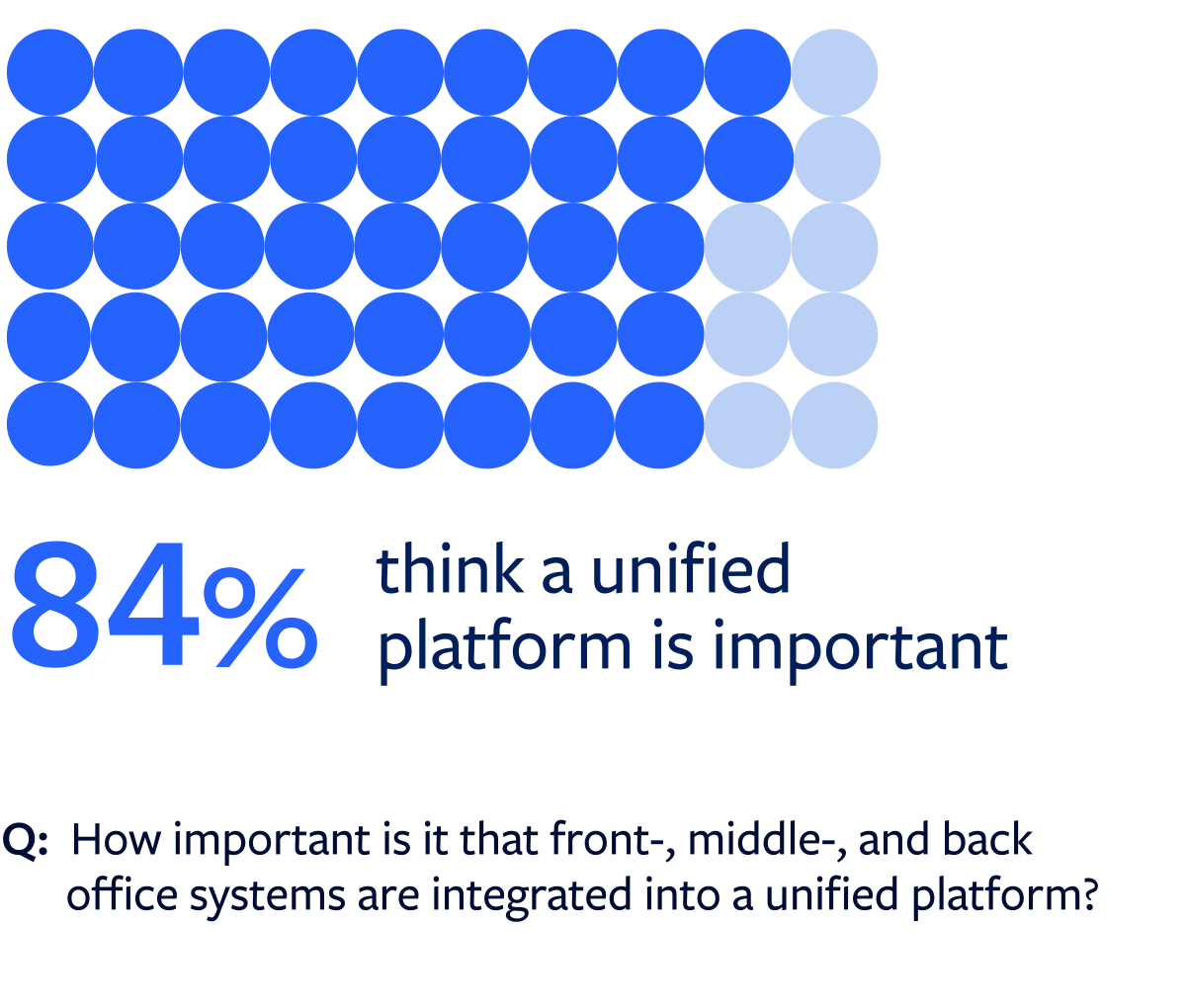
Infographic on unified financial data platforms showing 84% of firms say integrating front-, middle-, and back-office systems into a unified platform is critical for digital transformation in financial services.
A unified platform becomes non-negotiable

As firms increasingly stake their futures on innovation, 84% agree it is important for their front-, middle-, and back-office systems to be integrated into a unified platform to support these innovations.

Talk to us about the winner’s playbook

See how leading firms are mastering change, adapting faster, and building the infrastructure needed to compete in an era of accelerated digital transformation.

required
required
required
required
required
required
required
required
This site is protected by reCAPTCHA and the Google Privacy Policy and Terms of Service apply.

FAQs: Digital Transformation & Next‑Gen Technology Study

In 2026, digital transformation in financial services is driven by the need to gain competitive advantage, modernize legacy infrastructure, and respond to rapid advances in AI, data, cybersecurity, and tokenization. According to the 2026 Digital Transformation Study, transformation has become a core business strategy rather than a technology upgrade.

Artificial intelligence is the most impactful technology shaping financial services in 2026. The 2026 Digital Transformation Study shows that AI‑powered solutions are leading transformation efforts due to their ability to improve decision‑making, automate processes, and deliver measurable ROI faster than other technologies.

In 2026, nearly one-third of financial services technology budgets are allocated to innovation and emerging technologies. According to the 2026 Digital Transformation Study, these investments span AI, data architecture, cybersecurity, cloud platforms, and tokenization, with innovation spending expected to increase by more than 10% over the next four years.

AI adoption in financial services has accelerated rapidly in 2026, with 80% of firms reporting active use, up from 31% in 2025. The 2026 Digital Transformation Study also finds that 26% of firms are using agentic AI, and among those firms, 51% have moved beyond pilot programs into active operational use.

Yes, financial services firms are increasingly realizing measurable returns from AI investments. In 2026, 27% of firms report financial benefits from AI, up from 14% in 2025, representing a 13‑point year‑over‑year increase, according to the 2026 Digital Transformation Study.

Agentic AI refers to autonomous AI systems that can make decisions, take actions, and execute workflows without constant human intervention. While adoption remains low in early 2026, the 2026 Digital Transformation Study shows that 57% of firms are making moderate to large investments in agentic AI, with many planning increased spending over the next two years.

Enterprise AI readiness in financial services remains uneven in 2026. The 2026 Digital Transformation Study finds that, while 84% of firms say integrating front‑, middle‑, and back‑office systems into a unified platform is important, 43% believe they will need to build an entirely new technology stack to succeed in the age of AI.

The biggest barriers to AI adoption and digital transformation in financial services are talent shortages, insufficient data infrastructure, and legacy systems. According to the 2026 Digital Transformation Study, more than one-third of firms cite lack of skilled talent as a major obstacle to deploying GenAI and agentic AI at scale.

Tokenization is becoming increasingly important in capital markets because it transforms how assets are traded, cleared, and settled using blockchain and distributed ledger technology. The 2026 Digital Transformation Study shows that regulatory progress and real‑world use cases have moved tokenization from experimentation to operational reality, with more than half of firms actively investing.

The outlook for blockchain, distributed ledger technology, and tokenization in financial services continues to strengthen in 2026. According to the 2026 Digital Transformation Study, firms expect meaningful asset tokenization to emerge over the next 4–5 years, with money market assets likely to lead, alongside growing momentum for stablecoins and deposit tokens in global payments.

The 2026 Digital Transformation Study reflects that tokenization adoption across asset classes will take approximately  4–6 years, depending on the asset class and regulatory environment.