
The Case for CITs

Powering scalable and efficient model portfolios in retirement plans

Broadridge Image
Broadridge Image
By Toby Cromwell
Vice President, CIT Solutions Product Leader

More retirement plans are relying on models

Model portfolios in retirement plans are increasingly used by plan sponsors, consultants, and advisors to create unique investment outcomes for today’s participant demography. With the mainstream growth of 3(38) investment managers, Pooled Employer Plans, Multiple Employer Plans, and advisor-managed models, many defined contribution (DC) plans now rely on model portfolios to deliver consistent, risk-aligned/target date strategies across plan participant offerings.

What model portfolios are

Various risk-based portfolios or target-date strategies that have degrees of investment exposure to different asset classes.

What model portfolios offer

A curated investment experience without the complexity of self-directed fund selection or the cost of fully advisor-managed accounts.

The continued shift to models is especially meaningful. Why? The potential for increased efficiency and scalability with better outcomes for plan participants.

Model portfolios allow retirement advisors to implement the same investment methodology across dozens or hundreds of plans, while plan sponsors benefit from reduced fiduciary risk, clearer participant messaging and investment customization delivery. However, this approach only works if the models are built on the foundation of an efficient, scalable, and purpose-fit investment vehicle.

Enter the Collective Investment Trust (CIT).

Understanding CITs

CITs are pooled investment vehicles governed by bank trustees and offered exclusively to ERISA qualified retirement plans. They are increasingly becoming the preferred building blocks for model portfolios. Unlike mutual funds, CITs are not subject to SEC registration or public retail marketing rules. This allows them to operate with greater flexibility, faster time-to-market, and significantly lower expense ratios.

CIT structures typically include daily valuation and performance with holdings transparency to participating plans. Trades are processed and reconciled through the trustee or fund administrator, with net asset values (NAV) calculated based on the underlying holdings each business day. This supports efficient administration, consistent oversight, and scalable participation across multiple plan sponsors and investment platforms.

CITs are ideal for models

The advantages of CITs over mutual funds become clear when comparing key features that matter to model portfolio implementation

Feature CITs Mutual Funds
Cost structure
  • Flexible pricing
  • No 12b-1 fees
  • Lower acquired investment expenses
  • More standardized fees
  • Higher expense ratios
  • Higher administrative costs
Operational ease
  • No prospectus delivery required
  • Efficient, aggregated trade processing across platforms
  • Streamlined rebalancing
  • Complex registration and reporting requirements
  • Manual allocation changes across platforms
  • Operational burden for rebalancing
Customization
  • Tailored share classes
  • Custom market and channel exposure
  • Composite reporting features that adapt as models evolve
  • Limited flexibility
  • Standardized offerings
  • One size fits all embedded structure for investment fees
Scalability
  • Distribution through open-architecture recordkeeper and NSCC platforms
  • Broad access to plans of all sizes
  • Pricing flexibility and integrity
  • No expense ratio flexibility
  • Limited share classes
  • Pricing tiers that compromise access to certain plans
Using CITs, plan sponsors, plan aggregators, and retirement advisors can deliver custom-designed models that are truly participant-aligned: low-cost, well-diversified, and administratively clean.

Four core attributes that make CITs well-suited for model portfolio construction:

  • Act as building blocks for specific market exposure in models (active, passive, private markets, etc.)
  • Aggregated trade processing improving efficiency and reducing operational costs with daily valuation and NSCC trading
  • Allow white-labeled or custom share classes for each recordkeeper, channel, or plan
  • Provide simplified compliance with strict adherence to ERISA and DOL standards, along with fund overviews, fund fact sheets, and institutional pricing
Placeholder

Example: A recordkeeper offers five risk-based model portfolios, each built from a suite of CITs. Although trading occurs within the underlying CITs, the trustee maintains daily unitized values and performance at the model. Allocation changes are implemented and reflected in any of the related accounts holding that model.

How model portfolios operate

Model portfolios are non-discretionary investment blueprints created by a retirement advisor, recordkeeper, or asset manager. Participants are mapped or opt into models based on criteria like age, risk tolerance, or plan defaults such as a QDIA.

Model setup: Each model portfolio is offered as a separate CIT or similar pooled vehicle, assigned its own identifier (CUSIP). The underlying investments (mutual funds, ETFs, or other CITs) are not visible or adjusted within individual plan accounts.

Trading and valuation: The trustee or custodian executes trades and manages rebalancing within the underlying holdings, maintaining daily unit values for each model. When allocation changes occur at the model level, updates flow through to the associated plan accounts.

Fiduciary responsibility: Investment discretion resides with the advisor under a 3(38) arrangement, or the plan sponsor under a 3(21) structure.

CITs and model portfolios work together

Think of model portfolios as blueprints, and CITs as the building blocks. A well-designed retirement plan often uses:

  • Model portfolios to group participants into risk-appropriate strategies
  • CITs as the efficient, low-cost vehicles to deliver investment exposures within those models
  • The recordkeeper as the operational bridge allocating participant contributions to the CITs according to the model’s weightings, executing trades, and handling participant-level accounting

Example: A 60/40 target risk allocation model CIT may include five underlying CITs. Participants mapped to that model remain invested in those five funds, with allocations maintained by rebalancing periodically.

Models powered by CITs deliver results

CIT-based models drive significant cost reductions

Consider a national retirement-focused RIA firm that implemented target-risk model portfolios across over 100 DC plans and eight recordkeepers.

By transitioning from traditional model portfolios to refined model portfolios embedded in CITs, the firm reduced overall portfolio cost by nearly 25 basis points.

Additionally, clients received clear, consolidated fact sheets and performance reporting tailored to model usage with portability features like mutual funds. These lower investment input costs from CITs create better participant outcomes with added compounding to balances over long periods of time.

Using CITs streamlines operations

The same RIA firm was able to significantly cut the operational burden of manually rebalancing across platforms. This type of efficiency gain is becoming the norm as firms recognize the scalability advantages of CIT-powered models.

CITs can enhance participant outcomes

Plan design improvements are translating to better participant engagement. Take another example: a mid-sized corporate plan that shifted its investment menu to a streamlined set of CITs. The plan saw higher participant engagement with model defaults, smoother integration with its recordkeeper’s trading engine, and easier documentation, monitoring, and oversight for fiduciary review committees.

These improvements reflect a broader shift as CITs have matured from a niche solution for large plans into a mainstream strategy for efficient, fiduciary-aligned investing across retirement plans of all sizes.

Five myths of modern CITs

Despite their advantages, CITs are still misunderstood by some sponsors and advisors. Concerns around transparency, benchmarking, track records, and regulatory oversight persist—but the facts tell a different story.

Fact:

Modern CITs publish daily NAV nightly on the NASDAQ Fund Network. Historical performance and portfolio characteristics are available on Morningstar Direct.

Fact:

CIT trustees regulated by the OCC or state banking authorities act as fiduciaries, adding an additional layer of governance and oversight with additional oversight from ERISA and the DOL.

Fact:

CITs often mirror the investment strategy of existing mutual funds.

Fact:

CIT adoption is rapidly expanding into mid-market and smaller plan segments.

Fact:

CITs offer the ability to create a more bespoke portfolio that would not be offered in a typical 40 Act Mutual Fund.

Looking ahead: The CIT-model ecosystem expands

Most recordkeepers today can support custom models. As regulatory scrutiny focuses on plan expenses and participant outcomes, the marriage of model portfolios and CITs is poised to accelerate across plan types.

Market trends

  • CIT adoption is expanding beyond mega plans into the mid-market and smaller plan market, and CITs have surpassed mutual funds as the most popular target-date vehicle.
  • Retirement advisors are increasingly demanding lower cost CIT share classes to power their model frameworks.
  • Asset managers are launching CIT versions of flagship strategies to meet that demand, often using sub-advised or multi-manager models to deliver diversified exposures under a single trust structure.
  • Private Markets will begin to play a much bigger role in DC plans and model portfolios through delivery in a CIT vehicle.
Broadridge Image

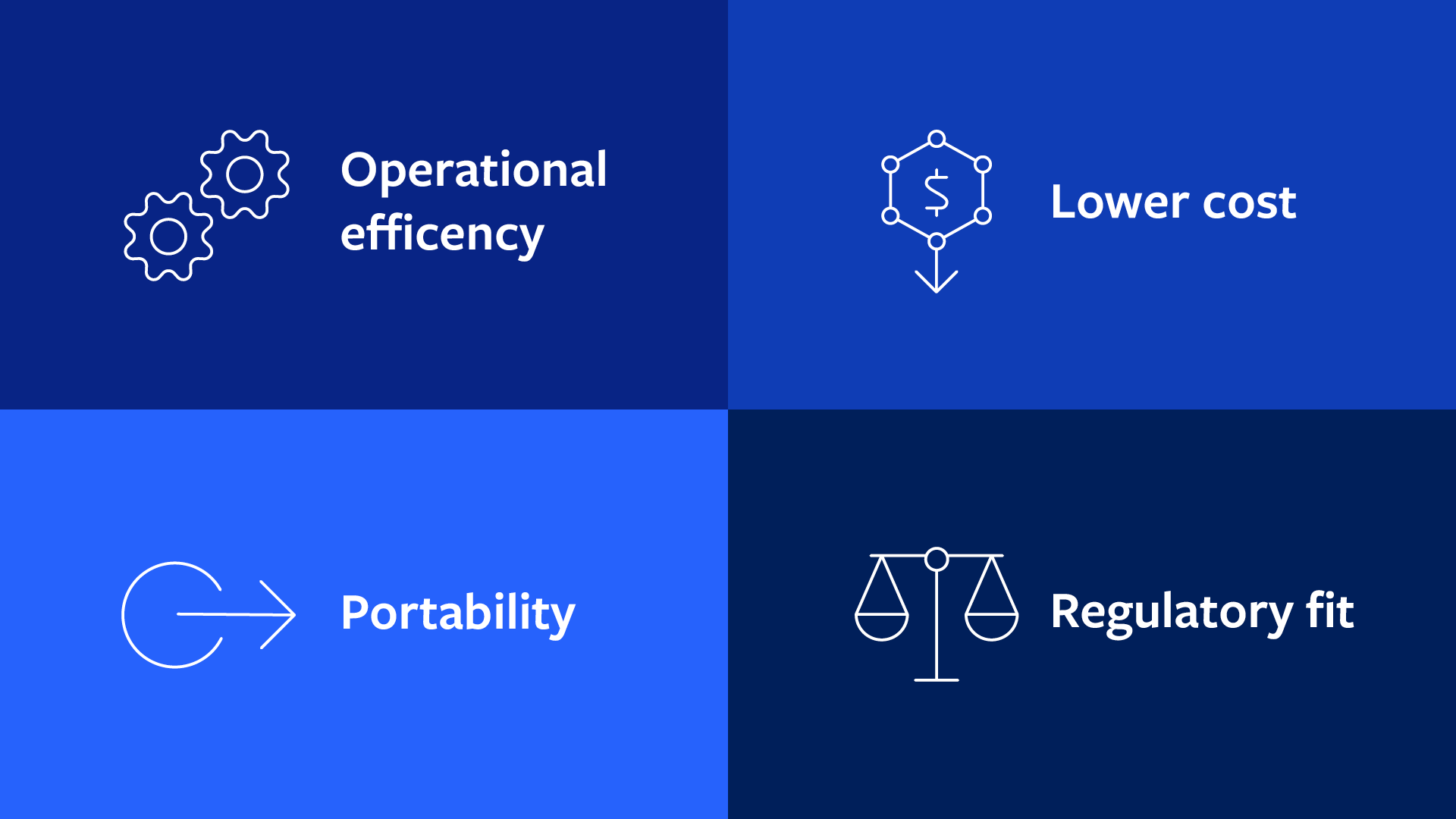
Model portfolios represent the cutting-edge future of retirement plan design. CITs are the investment vehicle that will take us there by offering operational efficiency, lower cost, portability, and the regulatory fit needed to support scalable, participant-first investment models.

Stand out from the competition and offer more

Set your firm apart, streamline your operations, and expand the availability of your funds. Matrix Trust Company, a Broadridge company, brings flexibility, insight, and know-how to every step as we help you develop, design, implement, and optimize CITs within retirement plans.

required
required
required
required
required
required
required
required
By proceeding, you agree that Broadridge can use your personal information to respond to your inquiry and send you occasional updates about Broadridge solutions and thought leadership. You can unsubscribe from our communications at any time. To learn more, view our Privacy Statement.
Want to speak with a specialist?
North America
+1 800 353 0103(option 3)
Hong Kong +852 3004 3094
Singapore +65 31 351 278